Boom and Bust – my achilles heel..

The boom and bust cycle, I’ve been there, I got the medal..

I definitely do not recommend it! Even so, it remains my achilles heel, so I’ve been thinking a bit about why that is.

Here’s what I’ve realised

There’s a reason that people with Fibromyalgia often push themselves too hard, too fast and then bust.

We know we have limited energy but we just want to get on with our lives – that’s only fair. It’s so frustrating to feel like you can’t achieve as much as you used to.

So when we have a good day we ‘make hay when the sun shines’ and then more hay and more hay – until our body decides ENOUGH IS ENOUGH!

Why do we do this?

One of the reasons is momentum. Once we start a task it’s hard to not stop before we’re finished and the task can grow as we see more things that need to be done. Or if it’s something we love doing, we naturally don’t want to stop!

It’s called momentum because we get caught up what we’re doing and are driven from one moment to the next to keep going.

Bargaining with ourselves

‘Just half an hour more’, ‘just one more phone call’, ‘I’ll just walk another block. it’s such a lovely day’!

When the inevitable crash comes you beat yourself up and tell yourself you’ll try harder. You BLAME yourself and your body for failing you.

Doing any or all of these things does not make you a failure

It just means you’re human and you care about living a full life.

But it also means you’re not getting the best out of your body, and you’re teaching it to push on when it’s crying out to stop – your capacity levels become lower & the crashes are harder.

Capability VS Capacity

I’ve talked about capability vs capacity here – it’s worth reminding yourself that you ARE a capable person, and by learning what your limits are on any given day, you’ve given yourself choices. 

Here’s what you can do about it

Step one (awareness and listening to your bodies signals):

This week, half way into a physical task or something that requires a lot of thinking ask yourself this question – How do I feel right now? 

  • Note how your body feels (Do I have pain or tension?)
  • Note how your brain is coping (Do I feel foggy?)
  • Note your stress levels 

Then take a moment to insert a tiny break of some sort. And see how that feels. 

  • Move gently if you’ve been still for a while 
  • Sit or lie down if you’re doing something physical. 
  • Take a breath (if intentional breath work is for you) 
  • Look out the window or at something in the room 

If writing stuff down is your thing take a few notes about what you discovered. Please don’t make a ‘job’ of this – it’s a gentle scoping exercise, not another thing to add to your to do list! No judgement, just data!

Step two – digging into your Boom and Bust behaviour

Again, no judgement please. We are working towards being able to do what matters most FOR YOU.

Once my boom & bust behaviour became unsustainable I asked myself these big questions so I could work out how to do things differently. Answering honestly has been a game changer for me and for the women I coach who have tried it.

What is Boom and Busting STOPPING me from doing – what’s it COSTING me in terms of living my life the way I want? (Physically, emotionally, socially)

How much TIME am I needing to recover when I could be doing something else that I care about? You may need to make a note of how often you’re flaring or unable to do what you need to/want to because of the effects of doing to much to answer this question

What brings me JOY?  Whether it’s playing with the kids/grandkids, going for coffee with friends, doing the gardening or something else completely – what do YOU like/want to do most of your life?

How is Booming and Busting impacting on doing those things you want to do most?

Next Step – PACING!

In my next post I’ll talk more about pacing, what it is & how it works best.

Please remember that people without Fibromyalgia also want to do all the things and no one person can! We all have limitations, and it’s good to remember that, to cut yourself some slack.

You are doing your best – never forget that! 

Find me here if you’d like to chat about your Boom Bust Behaviour and how we can address it gently so you can do what matters to do, again!


The Things We Carry

Having Fibro means you constantly feel like you’re on an uphill hike with a back pack full of stones even though your lab tests are normal & you might even look like you’re a well person.

Your invisible illness and the toll it takes is hard to carry.

In this blog post I talked about communicating with your Doctor and how tricky that can be.

When I presented to health professionals at a conference recently I wanted them to know how Fibro patients feel when they’re sitting across the desk. How they can communicate with them better & how they can understand them better.

I told them about the back pack full of stones

Fibro is a long hard walk up a hill on unsteady ground. You pick up stones from under your feet at regular intervals.

Each one of those stones represents the things you carry – pain, fatigue, brain fog, shame, guilt, fear, stigma, lack of understanding from those around you, lost dreams & hopes for the future – the list is long & I’m sure you could add more stones that are meaningful to you.

Everything is harder when you have pain and fatigue, and at some point the back pack gets really full.

The good news is, you have choices. 

You can remove stones & lighten the load!

The purpose of coaching is to walk beside you, while you find new ways to manage your Fibro:

✅  Learning how to chuck the stones that aren’t serving you

✅  Supporting you to refill the pack with super light tools you can reach for at any time.

✅  And most importantly, to help you get back to doing what matters most to you.

If you feel ready to work on stones that weigh you down & the tricky slippery path you’re treading  here’s where you can find me

Talking to Your Doctor about Fibromyalgia

Have you ever found it difficult to talk to your doctor about Fibromyalgia and how to manage it?

You are not alone! Fibromyalgia is a particularly tricky condition because your labs come back normal and doctors often aren’t trained to help you manage it successfully.

It is common to feel your concerns are ignored & to feel disbelieved. Even the kindest of doctors may not have many tools to help you feel better

Having Fibro is a hard enough grind without having to fight our corner all the time. It’s just not fair!

One thing that’s really important is how we prepare to talk to our Doctor and what we say in appointments. That includes how to get a diagnosis, being clear about our Fibro symptoms, excluding other conditions & some ways to share data with them.

In order to help my clients communicate with their Doctors more clearly about what they need I created a helpful checklist which you can find here.

I hope it helps! Please let me know. You can email me here


This blog post originated in an email to my list of subscribers. If you’d like to receive regular emails from my about all things Fibro please sign up here.

If Fibro Could Talk..

Why did you pick me, Fibromyalgia? 

It’s a question I ask myself a lot. Sometimes out of curiosity, so I can manage it better and sometimes more in anger and frustration.

If I could write Fibromyalgia a letter asking why I have it and how I manage it, so I can explain it to others, then this is the reply I would expect:

Dear Deb,
I’m sorry you have to live with me! I know I’m not the perfect house guest – I can really outstay my welcome, and I’m not always easy and definitely not predictable. I can be scary, overwhelming and confusing.

I picked you, Deb, because you are a caring person who has always put others before yourself. You’ve been so busy doing that you forgot to look after yourself! And that meant you lost the ability to listen to your body and to stop when you needed to. That’s one of the reasons it was so easy for me to move in.

You’re not alone – it’s estimated between 2% and 8% of the world’s population have Fibro, and that figure doesn’t cover all the people who have it, because it’s very under – diagnosed.

Some Doctors don’t even believe I exist! How ridiculous is that! 

At first you found it difficult to get your Doctor to address your symptoms & work out what was going on – that was hard. Not getting listened to can make me shout louder to be heard & that’s what happened..

Developing Fibro is really common for people who have trauma in their lives, ongoing or because of a one off event. You’d had chronic pain for a while before you got diagnosed with Fibro. And that made you vulnerable.

It’s also seen in families. Your Mum & your Grandad had chronic pain & fatigue, so that’s a factor too. Some of the viruses you’ve had have made you more likely to get a chronic illness

Please remember that NONE of this is your fault! 

The good news is – The things you do every day are lessening my impact on your life.

Pacing activities & work, getting good sleep, learning how to exercise without causing a flare, learning boundaries & most importantly learning how to regulate your nervous system have, as you know, made a huge difference to how I affect your life from day to day.

You’ve also learnt how to advocate for yourself with your Doctor & your workplace. You communicate better with your friends & family to ask for what you need. You value the small joys of life & actively pursue them.

Having me around is not the end of the world even though it can seem like it at first and when things are not going according to plan. You’ve managed really well, and now you’re helping others to do so too!

Yours sincerely
Fibromyalgia


This blog post originated in an email to my list of subscribers. If you’d like to receive regular emails from my about all things Fibro please sign up here.

When things don’t go according to plan – it’s ok to be NOT ok

It’s been a tricky couple of weeks, Fibromyalgia wise!

Life has been ‘life-ing’ as they say, and the last couple of weeks have been busy and hard. There’s also been some loveliness, with three family birthdays (including mine!), but even lovely things can tire you out, right?

It’s made me think about how unpredictable it is living with Fibromyalgia and what we do to manage it, when life throws you curve balls.

To be completely honest, I had a little wobble. Instead of kicking in with the things I know that help me, I lost sight of them for a moment, and consequently got quite overwhelmed.

It’s perfectly reasonable to feel NOT ok when this happens.

We’re not just affected physically by our Fibromyalgia, but also emotionally, mentally & socially, so it’s inevitable we won’t always handle a difficult times perfectly

My lovely Mum always used to say;

It’s ok to have a melt down, but don’t unpack your bags and live there!

So that’s what I did – had some time to ‘feel my feelings’ and live in my dressing gown for a bit. And it was lovely, I have to say – a kind of hibernation!

And then, I pulled up the plane and went back to my usual routine.

So..here’s some things that have helped my clients and myself when a Fibromyalgia melt down happens

  • Cancel what you can.
  • Adapt what you can’t – can you work from home, or meet that friend via zoom instead of in a busy cafe?
  • Accept help – and learn to be honest with the people around you so they will see you need it & offer to help
  • Try the smallest strategies in your toolbox (eg set a timer for a slow breath out)

Here’s what won’t help

  • Pushing through
  • Pushing down your feelings
  • Being mean to yourself about why you can’t be better, do better..
  • Wishing things were different – I can categorically promise you, this will not last forever.

Learning that ‘this too will pass’ and how to ride the waves of my Fibro instead of drowning has been the best lesson I’ve learned, without a doubt.

Recently I learnt about he ’90 second rule’ which I think could be really helpful for when you’re in the melt down phase and the thoughts are racing.

The gist of it is that a reaction to something only last 90 seconds in our body, biologically. Any reaction we have (negative or positive) is only made longer than that by our thoughts.

A suggested way to become more aware, and halt a negative thought loop is to watch a clock (preferably with a seconds hand) or a timer for 90 seconds. You observe the thought and then you have the choice to change it!

Here’s a more in depth explanation of the ’90 second rule’

I’d love to know what you think about this! You can let me know here 


Capability vs Capacity

Thanks to some excellent advice from a good friend I’ve been thinking about the difference between capability and capacity.

Knowing the difference helps me to choose what I can take on and what I have to politely decline.

It’s really hard to see yourself as no longer capable when Fibromyalgia puts the brakes on your life.

If you’re like me and you’ve always been capable or high achieving at work, or in any role which is outcome driven,  this will be tough.
If you’ve always been ‘everything to everybody’,  this will be tough.
If you have achieved things that you are proud of, but can no longer do,  this will be tough.

It’s especially hard if your identity has been tied up in those capabilities or achievements.

I was incredibly career driven – a teacher for over 30 years, I’d written exams, curriculum standards, advised teachers in my subject area and taught new teachers their craft. The very definition of capable! Letting all that go was tough & I’ve had to re-learn what is important to me.

Turns out what’s important isn’t my achievements, it’s the things I value the most – connection, family, creativity, helping others – and having the capacity to do those things is vital. I’m taking more quiet time (hello jigsaws puzzles) between ‘doing’ to just ‘be’.

Capacity is changeable and fluid

I always assess how I’m feeling before I decide whether I can do something. When assessing my capacity I work out how taxing whatever I’m asking of myself will be, physically, emotionally and mentally. I also think about how doing it might affect me down the track.

AND I always remind myself that my capabilities have not changed – I’m just choosing to apply my skills in different ways, or saying, no thank-you, when it needs to be said.

If what you’ve read today resonates with you & you are wondering about what working with a Fibromyalgia coach would be like, we can meet for a chat. I’d love to explain how I can support you! You can book in for a chat here. 

I wish I knew then what I know now..

Going at it hammer and tongs!

When I first got chronic pain and then my Fibro diagnosis I researched as much as I could about how to help myself get better. Once I was ‘armed’ with information I thought the answer to healing myself was approaching it as I would a full-time job – something I could ‘fix’ if I only tried hard enough and threw enough at it!

I set myself high standards and approached my healing with the same efficiency I would any other job. I knew what I needed to do and I did it full tilt! I tracked every symptom, logged everything that went in my mouth, tried every strategy and supplement all at once.

I wish I knew that my self care routine was unsustainable.. It was an inflexible regime full of self-chores, not self-care!

My pain and many of my fibromyalgia symptoms remained. I had no idea what I was doing that was working and what wasn’t, because I was in a frenzy..and exhausted by the effort.

And worse, I was stuck in a revolving cycle of hope and despair. Something would work for a while and then not – at which point I would become discouraged and blame myself for my lack of progress. Not a good place to be.

What I’ve learnt

In retrospect I understand that this was part of my high achieving perfectionist approach to life. I was going to lick this thing! Spoiler alert – I didn’t. Finally, and with the support of my coach I realised what I was doing and began to change my approach.

I wish I knew then that I couldn’t control every aspect of my condition and my life, but there are things I can do – and that small steps lead to great change over time.

These days I implement things slowly one at a time and only keep using strategies that work for my particular body. I stripped it right back and made small changes one by one – noticing the successes I did have, even if they weren’t perfect. And slowly they started to fit together into a manageable & flexible routine.

What works for me

I have lots of strategies in my toolbox – to mention just a few:

  • Calming my nervous system with research proven methods such as meditation, mindfulness, listening to music, and gentle movement (preferably outside in nature!)
  • Resting
  • Planning
  • Pacing
  • Slowing down – rushing is off the agenda, and frenzies are a thing of the past!
  • Setting boundaries

Over the next few posts I’ll break these strategies down for you, so you too can work on living better with Fibro. It can be done – one step at a time!

Keep the holiday feeling

What a holiday we’ve had..

Despite Fibromyalgia hitching a ride

It’s summer here and we’ve been lucky enough to travel round the South Island of New Zealand in our van. If you don’t know this part of the world then I highly recommend Googling some images. It’s phenomenally gorgeous (no bias at all!!) This holiday has been a while in the making – we needed to plan for it to be a success with some extra travellers on board – Fibromyalgia and chronic pain.

The van isn’t fancy, but the bed is super comfy (a non-negotiable requirement for my Fibro body) and we really enjoyed living a simpler life for a few weeks, with our only agenda being to see amazing places, walk when we could, & chill out!

And I felt great! And by great I mean my cup was stuffed full to overflowing with great experiences I could turn to when I was in pain after a big day (inevitable – but worth it!) and (crucially) after life kicked in when we returned.

I’m back at work now and I need that holiday feeling more than ever.

On my return home I found myself thinking – how can I keep this feeling? – relaxed, carefree, able to handle the days when I’m in pain or the stresses of life weigh heavy on me.

It occurs to me that what happens on holiday – especially one like ours which was so visually mind blowing – is that life grows bigger – even if the pain does not get smaller. Bear with me..

I have some great images to replay in my head for when I need them.

Maruia Hot Mineral Springs

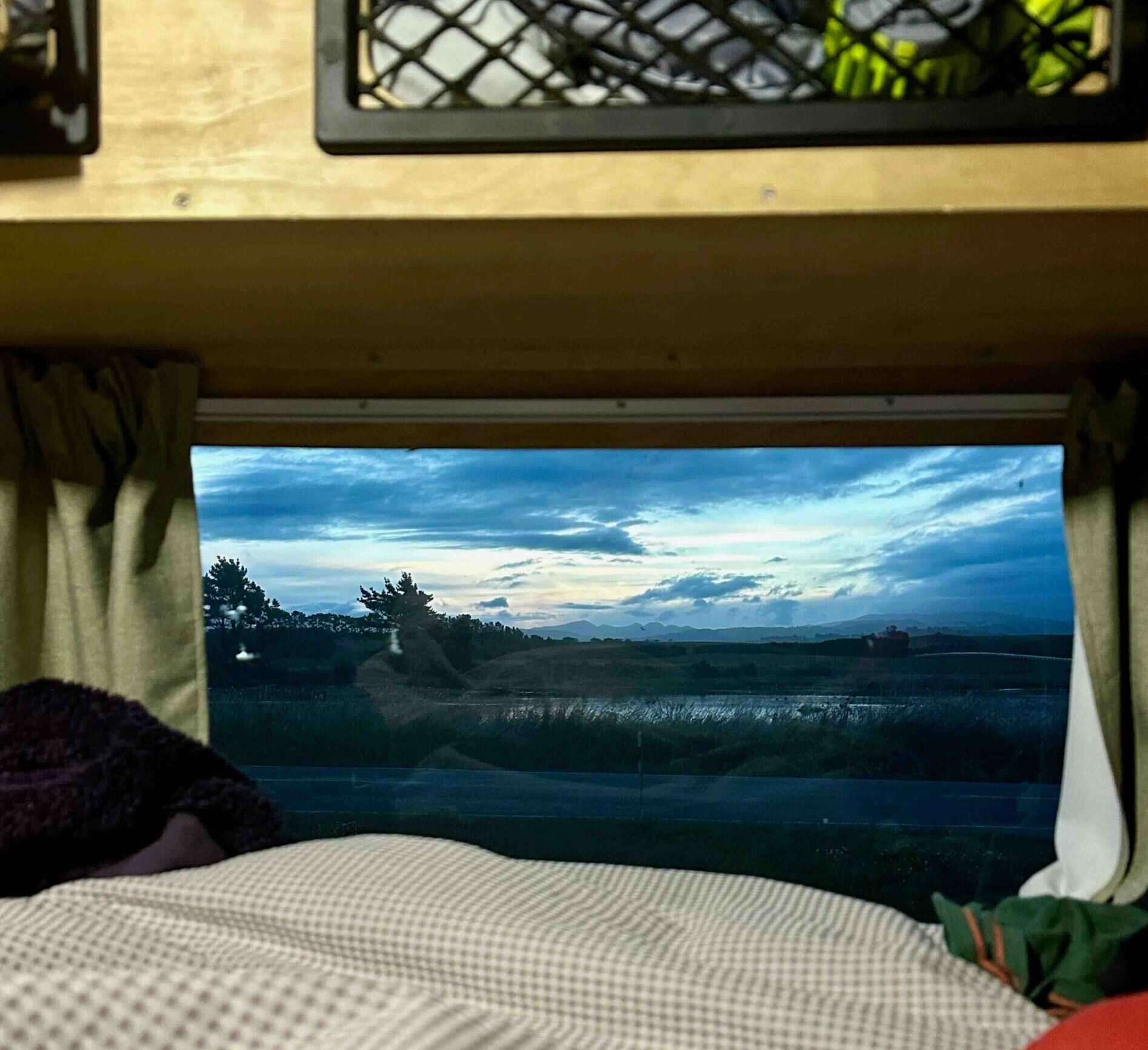
I can recreate that holiday feeling in my imagination WHENEVER I LIKE!  Looking out of the van from my bed, relaxing in a soothing mineral pool, the beauty and wildlife that surrounded us – I have lots to draw on now. And thanks to my daughter getting us a digital photo frame for Xmas I see my photos every single day and remember the feeling that I had when I was there.

Keep the holiday feeling

The key to our holiday success was less! It was a simpler life for the weeks we were away with less stress and less things to do. We weren’t rushing and had very few deadlines. I slept for longer and soundly, and read 4 books!

The optimal word here is LESS – and that’s the holiday feeling I’m trying to keep.

Simplifying life. Checking in every day to make sure I’m not overdoing it and that I’ve put some joy in my day to make sure that LIFE is bigger than PAIN. We can’t always ditch our responsibilities but we can make choices about what is most important to us to do and not do.

So, if you are to take one thing away from my experience I’d like it to be this

Even if you are not able to have a holiday right now or any time soon – I’d like you to close your eyes and imagine a place you have loved, that has made you feel relaxed, at peace – somewhere you can return to in your mind when times are tough.

You don’t need to strive all the time

Doing less of the ‘shoulds’ and a little more of what makes you feel good is a great place to start.

I’m here for you. Take care!

Deb

You can get regular (ish) emails with tips and tricks for managing your Fibro life here – I promise not to bombard you!

If you’re struggling with balancing your work life because of your Fibro here’s some strategies to help

Or if you are just overwhelmed and need some simple ways to cope – please use this SOS guide to feeling better.

And if you’d like to know more about what I do and how I can help you book a time to talk here 


Practical Tips for Post-Surgery

The Fibromyalgia Podcast Episode #142

Recently I was on Tami Stacklehouse’s podcast talking about having major surgery when you have Fibromyalgia. As part of our conversation I shared some practical tips for preparing and managing after surgery, which are below.

If you’d like to listen to the podcast, you can find it here – or you can watch the video here – I’d love you to hear/see what I had to say!

The MOST important thing: Keep everything you need close by

Get yourself a light bag – one that can be worn crossbody is useful if you’re on crutches. Having your ‘must haves’ nearby helps you keep your independence! Some things I had in my bag:

  • Moisturizer/Hand cream
  • Ear buds and earplugs
  • A pen & paper
  • Medications (in a plastic bag to make it easy to find the right one at the right time!)
  • A book/your kindle
  • A powerpack for phone/kindle
  • Tissues/Wet wipes
  • Lip balm
  • Glasses Cleaner
  • Travel sized toothpaste and toothbrush

Other practical tips (learnt by trial and error!)

To organise before your surgery:

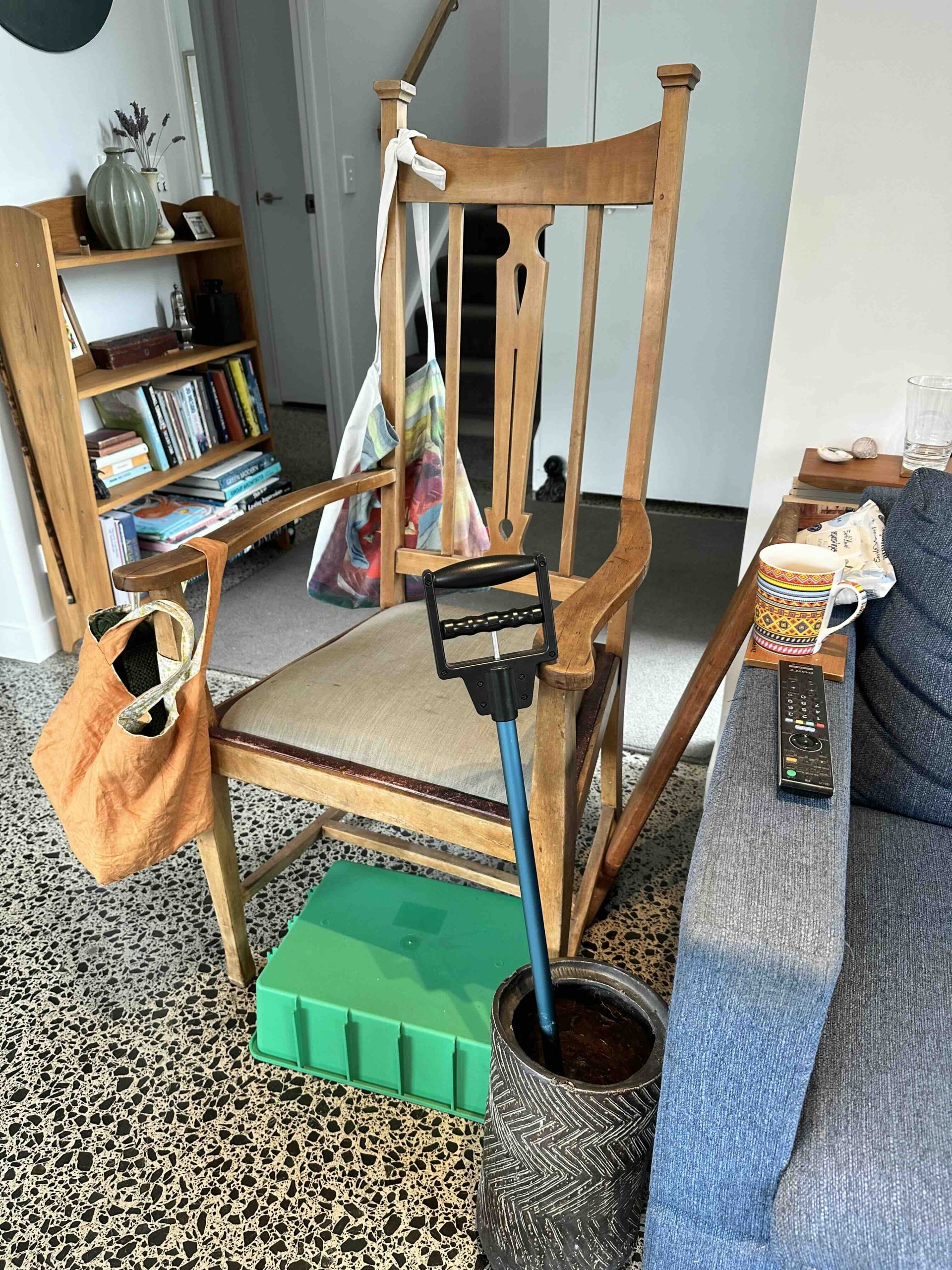
Get a pickerupperer – not sure of the technical term! Something for retrieving items from the floor. I have been amazed at how many things either fall on the floor or live there in the first place. I got one for upstairs and one for downstairs so there was always one close by. Also handy for hauling up pants!
A device to help you put your socks on is also really helpful as is a long shoe horn  & both devices were a game changer for my independence.

Source a good sturdy chair and something to rest your feet on before your op – once you are up and about you’ll still need to sit down/rest often. A good chair and a foot rest (doesn’t have to be fancy) will help with posture and allow you to do lower body circulation exercises to help prevent blood clots.

Find somewhere to store your crutches & pickerupperer when you’re sitting down – they will fall over, a lot..My clever partner bought in a clay pot from the garden.

An electric heating pad is much easier to wrangle than a wheat bag which needs re-heating often (although they are helpful too) and a cold pack is good for your surgery scar.

Consider having some frozen meals prepared/bought before your surgery &/or if you can get a meal prep service for a few weeks this is a god send, because you probably won’t be able to cook for a while or even think about telling your caregiver/significant others what to do, if cooking isn’t their thing! The more nutritious and tasty the better – All that energy you’re using on healing means you will be hungry!

Get a stick on shower shelf if you don’t have one and a long handled sponge. Purchase wet wipes and dry shampoo – there are some great sustainable and non-perfumed varieties available – Wetwipe ‘baths’ rather than a shower every day will save energy as taking a shower is a huge energy sapper.

Ask someone to help you with the practical tasks you need to get through &/or pace yourself really well – you don’t want to be exhausted going in to surgery. One thing I found really helpful was to get someone else to help me to change the sheets. It’s a hard task for many of us!

Post-surgery tips:

Keep what you need nearby at night – including a torch in case you need to get up in the night You may get quite sweaty at night – two sets of sheets on the bed &/or cotton nightwear can be helpful. And sticking your legs out from under the duvet if you can!

Hydrate – This really helps to get those hospital drugs out of your system and helps with postoperative constipation (I’m a New Zealander, so Kiwifruit is my go to!)

Comfy clothes – try not to stay in your PJ’s all the time – it begins to get depressing after a while – throw on a nice scarf or put on some mascara to cheer yourself up

Yoga nidra (deep yoga rest) – there are plenty of these available online. Listening to a yoga nidra is really helpful for relaxing your body and preparing it for sleep

If you have a post-surgery exercise programme do your exercises after taking your pain meds and REST completely after doing them. A cold pack is a good add-on pain relief tool (don’t leave it on for more than 20 mins at a time)

MOST IMPORTANTLY – LISTEN TO YOUR BODY

No amount of pushing will help you heal any faster, in fact it is likely to make healing take much longer. Sleep as much as you need and look after your sleep hygiene so your deep sleep is prioritised. As my Mum used to say ‘when you’re sleeping you’re healing’ – it’s just that Fibro people really need to work at it!

Please reach out if you need to talk about these tips further – you can book a 20 minutes complimentary call here

If you are overwhelmed and don’t know where to start – try these simple strategies as a starting point.

If you’d like to

Take Care – I’m here for you!

Deb